

LongServing Technology says its proprietary photonic chip architecture could challenge conventional silicon-based computing by using ceramic substrates, optical pathways, and new photonic materials.
The semiconductor industry has spent decades pushing silicon technology toward increasingly smaller, faster, and more powerful chips. From smartphones and cloud infrastructure to artificial intelligence data centers, modern computing depends heavily on sophisticated electronic processors.
But LongServing Technology is pursuing a radically different vision.
The company says it is developing a new generation of photonic chips designed to process information using light rather than relying exclusively on the movement of electrons. According to the company, its approach combines ceramic substrates, proprietary X-photonic materials, and semi-photoresist-based logic structures to create a fundamentally different chip architecture.
If independently validated and successfully commercialized, the technology could have significant implications for the future of AI computing, semiconductor manufacturing, data centers, and high-performance computing.
Rethinking the Conventional Silicon Chip
Traditional electronic processors operate by controlling electrical signals through highly sophisticated semiconductor structures. Producing today’s most advanced chips requires complex fabrication processes, specialized materials, advanced lithography, and extremely controlled manufacturing environments.
LongServing Technology believes photonic computing can approach the problem from another direction.
Rather than relying entirely on electrical current for computation and communication, photonic architectures use the physical properties of light and photons to transmit and potentially process information.
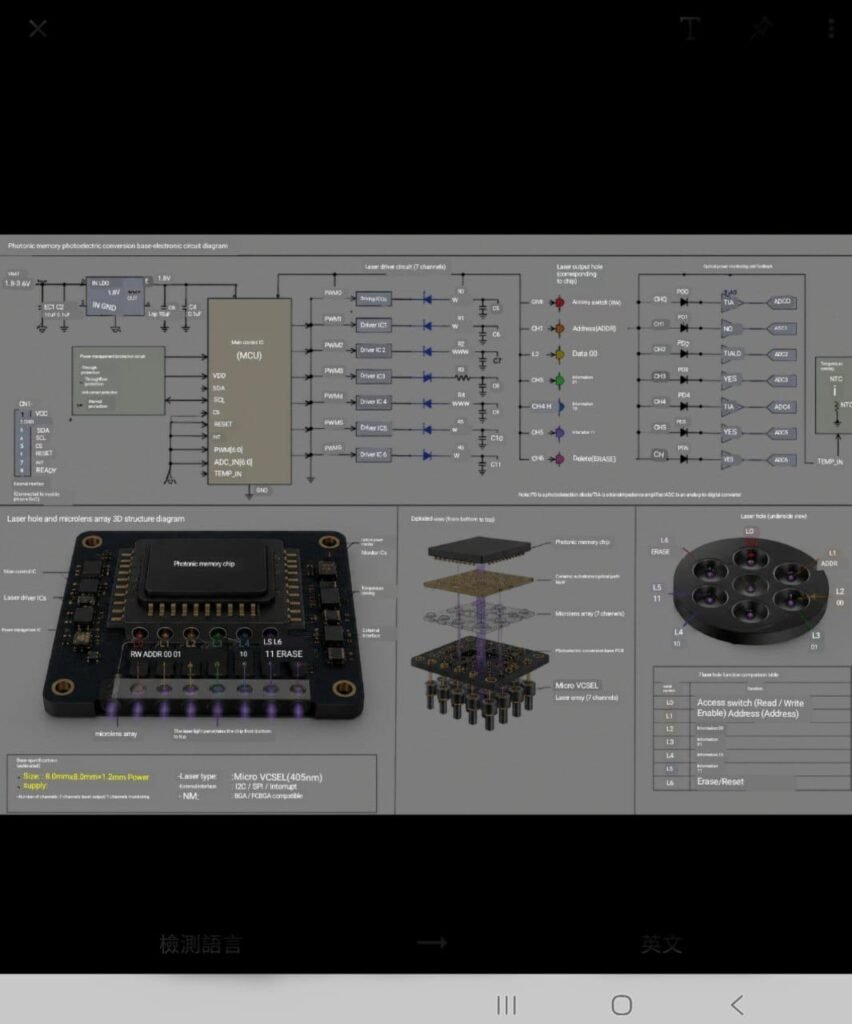
The company’s proposed architecture uses what it describes as conventional ceramic substrates while creating optical pathways with its proprietary X-photonic material. Logic structures are reportedly manufactured using semi-photoresist materials.
The company argues that this approach could potentially simplify aspects of chip manufacturing compared with the highly complex processes used to manufacture cutting-edge electronic processors.
Why Photonic Computing Matters
Photons have several characteristics that make them attractive for next-generation computing.
Unlike electrons moving through conventional electrical interconnects, optical signals can transmit enormous amounts of information and can potentially operate across multiple wavelengths simultaneously. Optical technologies have already become important in telecommunications and high-speed data-center interconnects.
The next challenge is to move beyond simply using light to move data.
The emerging field of photonic computing seeks to use optical phenomena directly for computational operations.
That distinction could become increasingly important as conventional electronic processors encounter challenges involving power consumption, heat generation, data movement, and the cost of scaling computational infrastructure.
The AI Revolution Is Increasing Pressure on Hardware
The rapid expansion of artificial intelligence has transformed the economics of computing.
Training and operating increasingly sophisticated AI models requires enormous quantities of computational resources. Data centers are consequently investing heavily in processors, accelerators, memory, networking equipment, cooling systems, and electricity infrastructure.
This creates a fundamental industry challenge:
How can computing performance continue increasing without allowing energy consumption and infrastructure costs to rise at the same pace?
LongServing Technology believes photonic computing could offer one potential answer.
The company’s vision is not simply to develop faster optical communication between conventional processors. Instead, it aims to create a computing architecture in which photonic technology becomes part of the fundamental processing system.
A Potentially Different Manufacturing Model
One of the company’s most ambitious claims concerns semiconductor manufacturing.
Modern leading-edge chip production requires highly sophisticated fabrication facilities and equipment. Advanced lithography is one of the most technically demanding aspects of semiconductor manufacturing, alongside deposition, etching, metrology, packaging, and contamination control.
LongServing Technology argues that its proposed photonic architecture could reduce some of these manufacturing requirements.
The company says its use of ceramic substrates and proprietary photonic materials could provide a simpler manufacturing pathway than conventional leading-edge semiconductor fabrication.
However, this proposition will ultimately depend on experimental evidence.
For any new chip technology, the critical questions are not only whether the architecture works in principle, but whether it can be manufactured reliably, repeatedly, economically, and at commercial scale.
Beyond Silicon Photonics
The term “silicon photonics” is increasingly common in the technology industry, but LongServing Technology’s stated vision goes further.
Silicon photonics generally integrates optical communication components with semiconductor platforms. It is particularly valuable for moving enormous quantities of data between processors, memory, and networking systems.
LongServing Technology describes its technology as a broader form of photonic computing, where light is intended to play a more fundamental role in processing information.
The distinction could be significant.
If optical technology can eventually be used not only for communication but also for logic, memory, and computation, the resulting architecture could look very different from today’s electronic computers.

Dr. Ko Cheng Fang’s Disruptive Industry Prediction
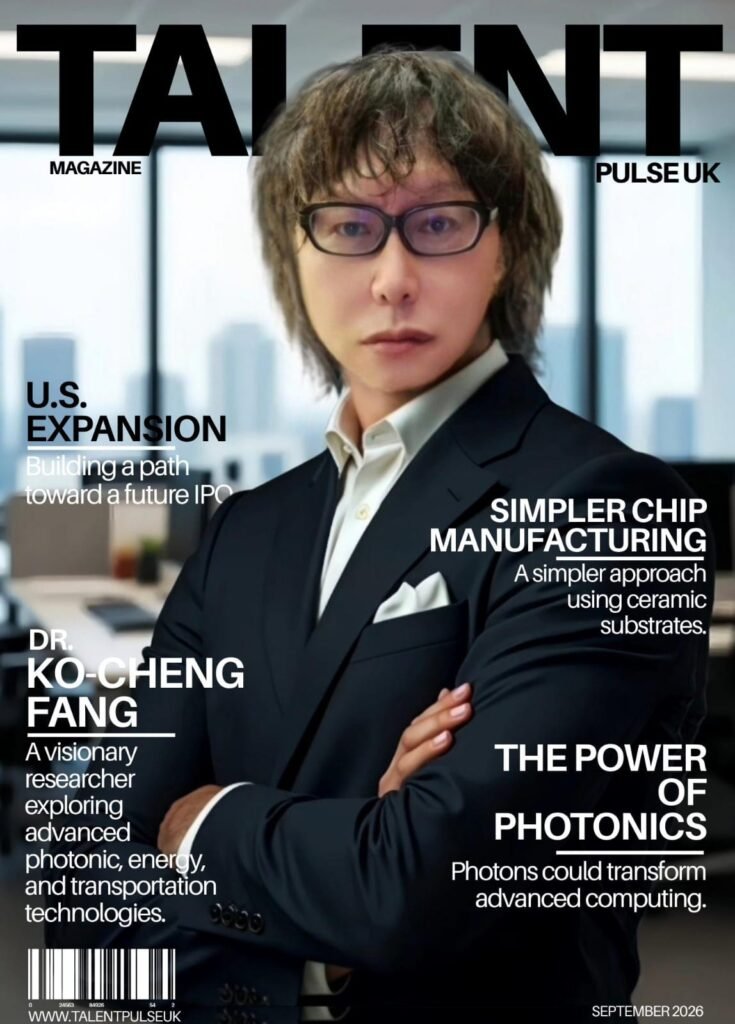
Dr. Ko Cheng Fang, associated with LongServing Technology’s technology development, has expressed an unusually strong belief in the disruptive potential of photonic computing.
In his view, the semiconductor industry may be underestimating how quickly a commercially viable photonic architecture could change the competitive landscape.
He argues that companies investing enormous amounts of capital into conventional electronic computing could face substantial challenges if a commercially scalable photonic alternative emerges sooner than expected.
Some of his predictions go as far as suggesting that rapid adoption of a superior photonic platform could place significant financial pressure on companies whose business models depend heavily on existing semiconductor technologies.
These statements represent Dr. Fang’s perspective and forward-looking assessment, rather than an established prediction of future corporate failures.
Nevertheless, the underlying question is an important one: what happens when a fundamentally different computing architecture becomes sufficiently competitive to challenge an established technology ecosystem?
The Race to Build the Next Computing Platform
Technology history repeatedly demonstrates that dominant architectures can eventually be challenged by new approaches.
The transition from vacuum tubes to transistors, mechanical storage to solid-state storage, and conventional telecommunications to internet-based communications all demonstrate how technological advantages can reshape entire industries.
Photonic computing could potentially represent another such transition.
But unlike a conventional product upgrade, a genuine computing-platform transition requires much more than a promising prototype.
A successful photonic computing platform would need:
- Demonstrated performance advantages
- Reliable manufacturing processes
- Competitive production costs
- High manufacturing yields
- Long-term component reliability
- Scalable materials production
- Suitable memory architecture
- Software and programming support
- Integration with existing computing systems
- Independently verifiable technical results
These factors will determine whether photonic computing becomes a major commercial platform or remains primarily a specialized technology.
LongServing Technology’s Proposed U.S. Expansion
LongServing Technology has also outlined an international commercialization strategy.
According to Dr. Fang, the company plans to establish a U.S. subsidiary and potentially grant the American entity exclusive rights to its patent portfolio.
The stated objective is to create an international corporate structure capable of supporting future commercialization and potentially positioning the company for a U.S. public-market listing.
Any future IPO would, of course, depend on regulatory compliance, intellectual-property ownership, audited financial results, corporate governance, investor requirements, and successful commercialization of the underlying technology.
Evidence Will Define the Technology’s Future
The biggest question surrounding LongServing Technology is ultimately not whether photonic computing has potential.
It is whether this particular photonic architecture can deliver measurable advantages in the real world.
Independent demonstrations will therefore be crucial.
Investors and technology companies will want to see reproducible results showing performance, energy efficiency, manufacturing feasibility, reliability, scalability, and cost.
If LongServing Technology can provide compelling evidence across these areas, its technology could attract considerable attention from the semiconductor, AI, telecommunications, and data-center industries.
Could Photonic Chips Change the Future of AI Computing?
It would be premature to declare the end of silicon.
Silicon remains one of the most successful technological platforms in human history, supported by an enormous global manufacturing ecosystem, supply chain, software infrastructure, and research base.
However, the limitations of electronic computing are driving researchers worldwide to investigate alternatives and complementary technologies.
Photonic computing is one of the most promising areas of that research.
LongServing Technology’s proposed architecture represents an especially ambitious version of that vision—one that seeks to rethink not only how computing signals move, but how chips themselves are constructed.
If the company’s claims can be demonstrated through independently verifiable prototypes and scalable manufacturing, the consequences could extend far beyond one company.
The next major computing revolution may not simply involve making electronic chips smaller.
It may involve changing the fundamental physical medium through which computation takes place—from electrons to photons.
For now, the industry remains focused on silicon.
LongServing Technology is betting that the next chapter of computing could be written with light.