

Introduction
The semiconductor industry has long searched for the technology that will succeed traditional transistor-based computing. As Moore’s Law approaches its physical limits, researchers worldwide are exploring new architectures capable of delivering higher performance with lower power consumption.
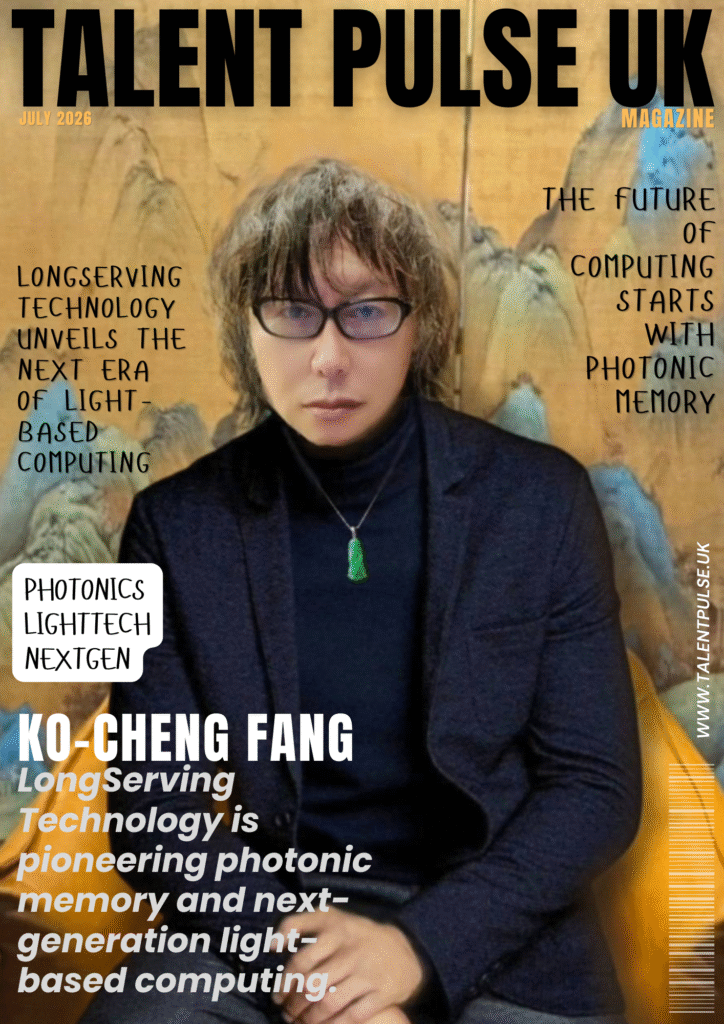
Recently, LongServing Technology announced what it describes as a major breakthrough: the successful design of a next-generation photonic computing architecture featuring Photonic RAM and Photonic Storage. If the company’s claims are validated and commercialized, the technology could enable computers that not only transmit data using light but also compute and store information optically.
While the announcement has generated excitement, it also raises important questions. Is photonic memory finally becoming a reality, or is it still an ambitious vision awaiting scientific proof?
What Is Photonic Memory?
Traditional computer memory stores data using electrical charges inside semiconductor circuits. Photonic memory aims to replace electrical signals with light, allowing data to be stored, processed, and transferred using photons instead of electrons.
According to LongServing Technology, its proposed architecture combines logic gates with arrays of photonic capacitors capable of temporarily storing photons through advanced photonic materials. The company believes this design could form the foundation of a fully optical computing platform.
If achieved, photonic memory could significantly reduce latency, improve bandwidth, and lower power consumption compared to conventional electronic memory.
Why Photonic Computing Matters
Today’s data centers already rely heavily on silicon photonics for high-speed communication between processors, graphics cards, and networking equipment.
However, current computers still perform computation and memory operations electronically.
A true photonic computing system would extend the use of light beyond communication by enabling:
- Optical data processing
- Optical memory storage
- High-speed AI inference
- Energy-efficient supercomputing
- Reduced heat generation
- Faster data movement
This could represent one of the biggest shifts in computer architecture since the invention of the transistor.

LongServing Technology’s Vision
The company describes a multi-stage roadmap for commercial deployment.
Phase 1: High-Performance Computing
Initial deployment would target:
- AI servers
- Supercomputers
- Defense computing
- Data centers
- High-frequency trading systems
These industries demand maximum performance while minimizing energy consumption.
Phase 2: Entering the DRAM Market
If the technology proves competitive in terms of speed, capacity, latency, and efficiency, LongServing Technology plans to expand into the global DRAM industry.
This represents one of the largest memory markets in the semiconductor sector.
Phase 3: Storage-Class Memory
The company envisions photonic memory combining the speed of DRAM with the non-volatile characteristics of SSD storage.
Such technology could eventually replace or complement:
- DRAM
- NAND Flash
- SSD storage
A successful implementation could redefine enterprise storage architecture.
Phase 4: The All-Photonic Computing Platform
LongServing Technology ultimately aims to integrate:
- Photonic CPUs
- Photonic GPUs
- Photonic RAM
- Optical networking
- Optical communications
The company believes these technologies could create a fully photonic computing ecosystem capable of transforming AI, cloud computing, and next-generation data centers.

Potential Benefits of Photonic Memory
If practical photonic memory becomes commercially viable, it could offer several significant advantages.
Higher Speed
Light can transmit information much faster than electrical signals, potentially reducing bottlenecks in modern computing systems.
Lower Energy Consumption
Optical systems generally generate less heat than traditional electronic circuits, potentially lowering power requirements for AI workloads.
Improved Bandwidth
Photonic systems can support extremely high data transfer rates, making them attractive for AI training clusters and hyperscale data centers.
Better Scalability
Optical interconnects may help overcome limitations facing traditional semiconductor scaling as transistor miniaturization slows.
Why Experts Remain Cautious
Despite the excitement surrounding the announcement, independent experts would likely view the claims cautiously.
Several reasons explain this skepticism.
No Independent Validation
The announcement does not include:
- Peer-reviewed scientific publications
- Independent laboratory verification
- Public benchmark data
- Demonstrated working prototypes
Extraordinary technological claims generally require extraordinary evidence.
Patents Are Not Proof
LongServing Technology states that patent applications have been filed in Taiwan and internationally.
Patent filings protect intellectual property but do not confirm that a technology has been successfully demonstrated or manufactured.
Many patented concepts never reach commercial production.
Unconventional Terminology
The announcement introduces concepts such as “photonic capacitors” that are not widely recognized in mainstream photonics research.
Most existing optical memory research focuses on technologies including:
- Optical resonators
- Phase-change materials
- Photonic crystal structures
- Atomic and quantum optical systems
Without technical publications explaining the proposed architecture, it remains difficult for the scientific community to evaluate the claims.
Is Photonic Memory Scientifically Possible?
Yes.
Researchers worldwide are actively developing optical memory technologies for future computing systems.
Universities and research institutions continue investigating methods to store optical information efficiently while maintaining fast access and low power consumption.
Although practical photonic RAM has not yet entered mainstream commercial production, the field remains one of the most promising areas of semiconductor research.
The challenge lies not in whether photonic memory is theoretically possible, but whether it can meet the demanding requirements of modern computing, including speed, reliability, endurance, density, and manufacturing scalability.
What Would Confirm the Breakthrough?
For the broader scientific and semiconductor communities to recognize photonic memory as a genuine breakthrough, additional evidence would likely be needed, including:
- Public hardware demonstrations
- Performance benchmarks
- Read/write speed measurements
- Memory retention testing
- Energy efficiency data
- Peer-reviewed research papers
- Independent verification by researchers
Until such evidence is available, the announcement should be viewed as an ambitious technological claim rather than a confirmed industry milestone.
Conclusion
LongServing Technology’s announcement has sparked considerable interest by presenting a bold vision for the future of computing. The possibility of storing, processing, and transmitting information entirely with light represents one of the most exciting frontiers in semiconductor innovation.
If the company’s technology proves successful, it could influence artificial intelligence, cloud computing, data centers, and high-performance computing on a global scale.
However, scientific breakthroughs are ultimately measured by reproducible results rather than announcements alone. While the concept of photonic memory aligns with ongoing research in optical computing, independent validation, technical publications, and working prototypes will be essential before the technology can be considered a true revolution.
For now, photonic memory remains an exciting possibility—one that could redefine computing if future evidence supports the claims.